Disclosure Is Not Disqualification in Dietary Guidelines Review
Disclosure Is Not Disqualification in Dietary Guidelines Review
Carver Center Files Memorandum Supporting Applied Expertise in National Nutrition Policy
By the Carver Center for Agriculture & Nutrition
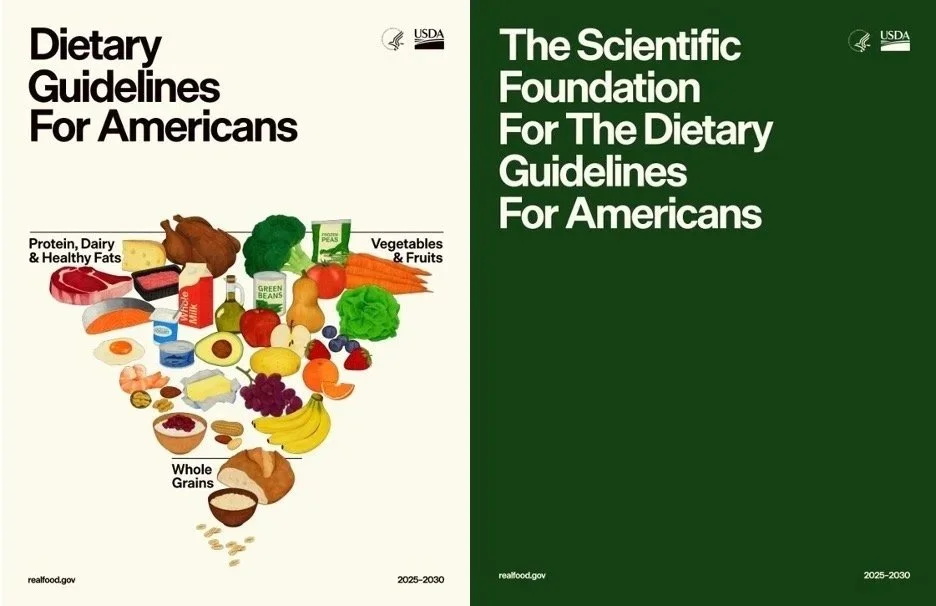
Open the 90-page Scientific Foundation document that accompanies the 2025-2030 Dietary Guidelines for Americans. Among the first substantive pages is a section titled “Disclosure of Nutrition-Related Private Interests.”
There, a table lists the people – all of them Ph.D.s – who contributed to a scientific review of the guidelines, and it summarizes their professional ties and affiliations.
Those pages are now the basis for a petition filed by the activist group Physicians Committee for Responsible Medicine. The petition asks the Inspectors General at HHS and USDA to take extraordinary steps that would lead to revocation of the Guidelines. Coverage in media outlets, including the New York Times and Newsweek, has amplified the claim and framed the issue as one of alleged “industry” influence.
The affiliations cited in the petition come directly from the government’s disclosure table, compiled and published by the agencies. Most of the individuals listed are university researchers whose work intersects with nutrition science, food production, or commodity-supported research, including advisory and research relationships common in applied fields.
In applied fields, such as nutrition and agriculture, that intersection is routine and should be expected. It is how research is funded and tested.
The dispute turns on how those disclosed relationships should be treated. For that reason, the Carver Center has submitted a memorandum to the Inspectors General at HHS and USDA affirming that applied expertise remains essential in national agriculture and nutrition policy.
How expertise is built
Nutrition and agriculture operate in real systems. Farms. Processing plants. Supply chains. Grocery shelves. Dinner tables. Household budgets.
A researcher studying dietary protein must understand metabolism and food supply. A scientist evaluating sodium reduction or ingredient removal must know how reformulation affects stability and safety. Work on infant nutrition intersects with agriculture, transport, and federal regulation. National dietary advice affects crop demand, food prices, and substitution patterns.
Researchers in these fields often work with producers, processors, public agencies, and foundations. Labeling that engagement improper would shrink the pool of experts who understand how food policy works in practice – and lead to worse, not better, outcomes.
How the Guidelines are issued
Federal law assigns responsibility for issuing the Dietary Guidelines to the Secretaries of HHS and USDA. Advisory committees review evidence. They do not write binding policy.
The agencies consider multiple sources of scientific input and exercise judgment.
The current petition asks Inspectors General to treat disclosed affiliations, combined with disagreement over conclusions, as a defect in process. Inspectors General exist to uncover concealment, fraud, or unlawful conduct. The petition instead argues that disclosed professional engagement, paired with policy disagreement, makes the process illegitimate.
That approach, if successful, would change who participates in national nutrition guidance.
Where Carver stands
Applied expertise matters. Nutrition policy affects what food is produced, how it is priced, and what appears on school menus and grocery shelves. Scientists who understand those systems belong in the room.
National dietary guidance should be judged by the strength of the evidence and how well it works for the public. Excluding researchers because they work in and study real food systems would distance policy from reality.