
Essays & Perspectives

Janie Hipp on Agricultural Finance, Protecting the Food System and Rebuilding Trust
What will it take to keep America fed for generations to come? Janie Hipp reflects on smart capital, strong institutions, trust and the people who sustain the nation’s food system.
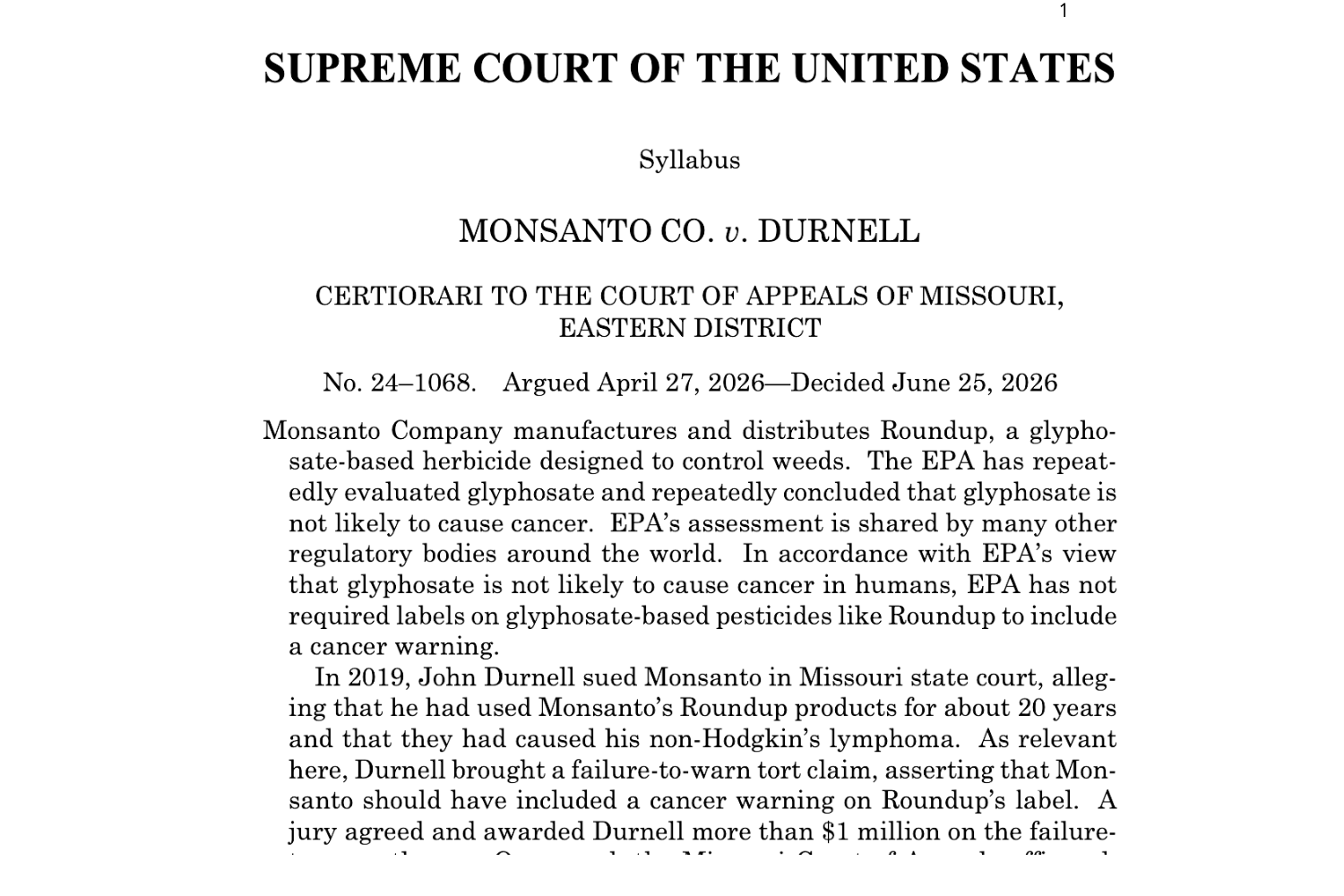
In 7-2 Decision, the Supreme Court Rules Federal Law Governs Pesticide Warnings
The Supreme Court today resolved one of the most consequential agricultural cases in recent years, holding that the Federal Insecticide, Fungicide, and Rodenticide Act expressly preempts a state-law failure-to-warn claim seeking to require a cancer warning on Roundup’s label.
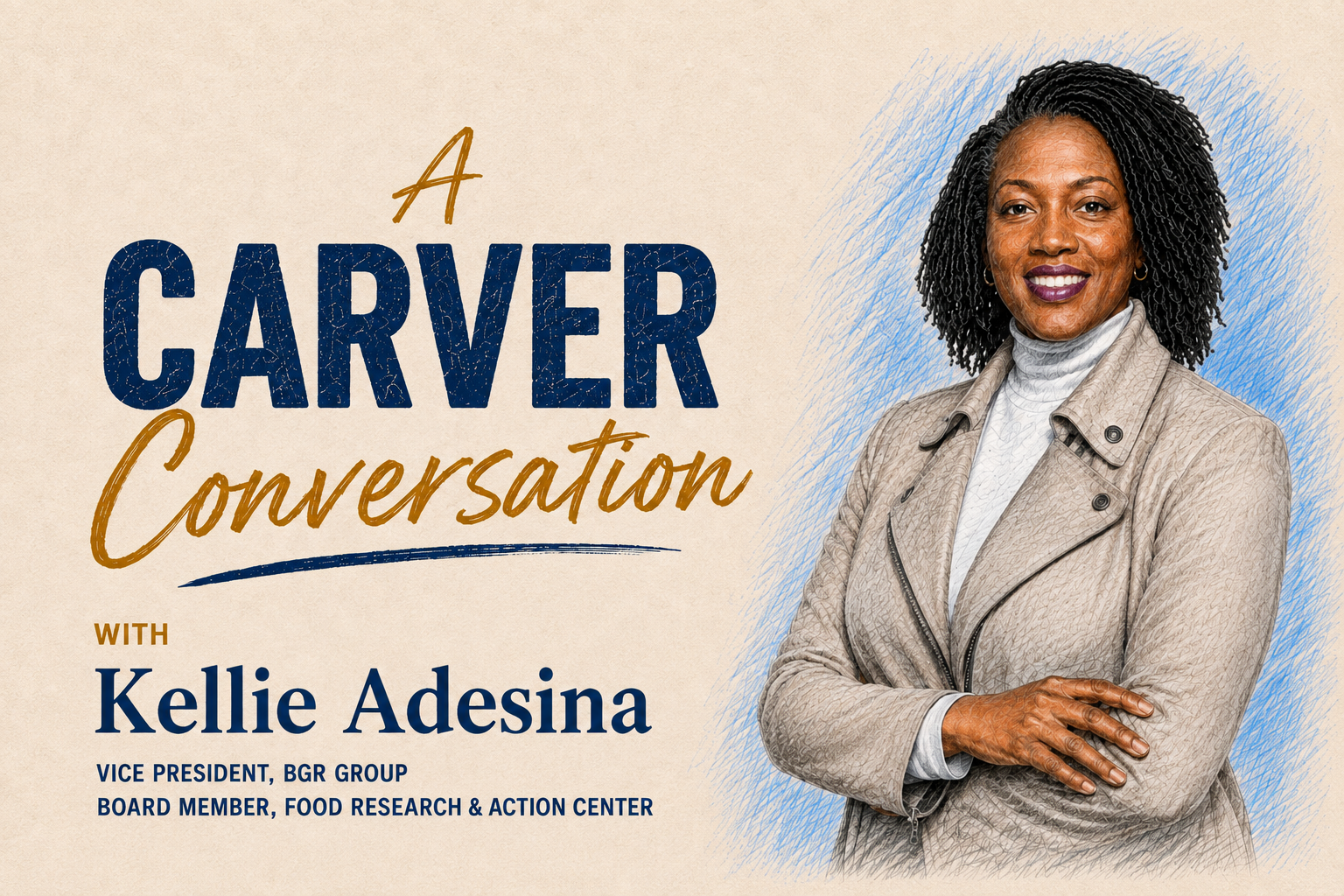
Kellie Adesina on Food Affordability, Nutrition and the Future of Agricultural Research
What does food affordability really mean? In the first installment of "A Carver Conversation,” Kellie Adesina explores access, nutrition, agricultural innovation, and the policies that shape America’s food system.

Minnesota Star Tribune Letter to the Editor: This is an interstate commerce issue
The debate over Proposition 12 is not about animal housing standards. It is about whether one state can impose production requirements on farmers in other states as a condition of market access.

Denver Post Letter to the Editor: Gestation crate laws shouldn’t impede interstate commerce for agriculture
The debate over gestation crates is really a debate over interstate commerce: Can one state use market access to regulate agricultural production in another?
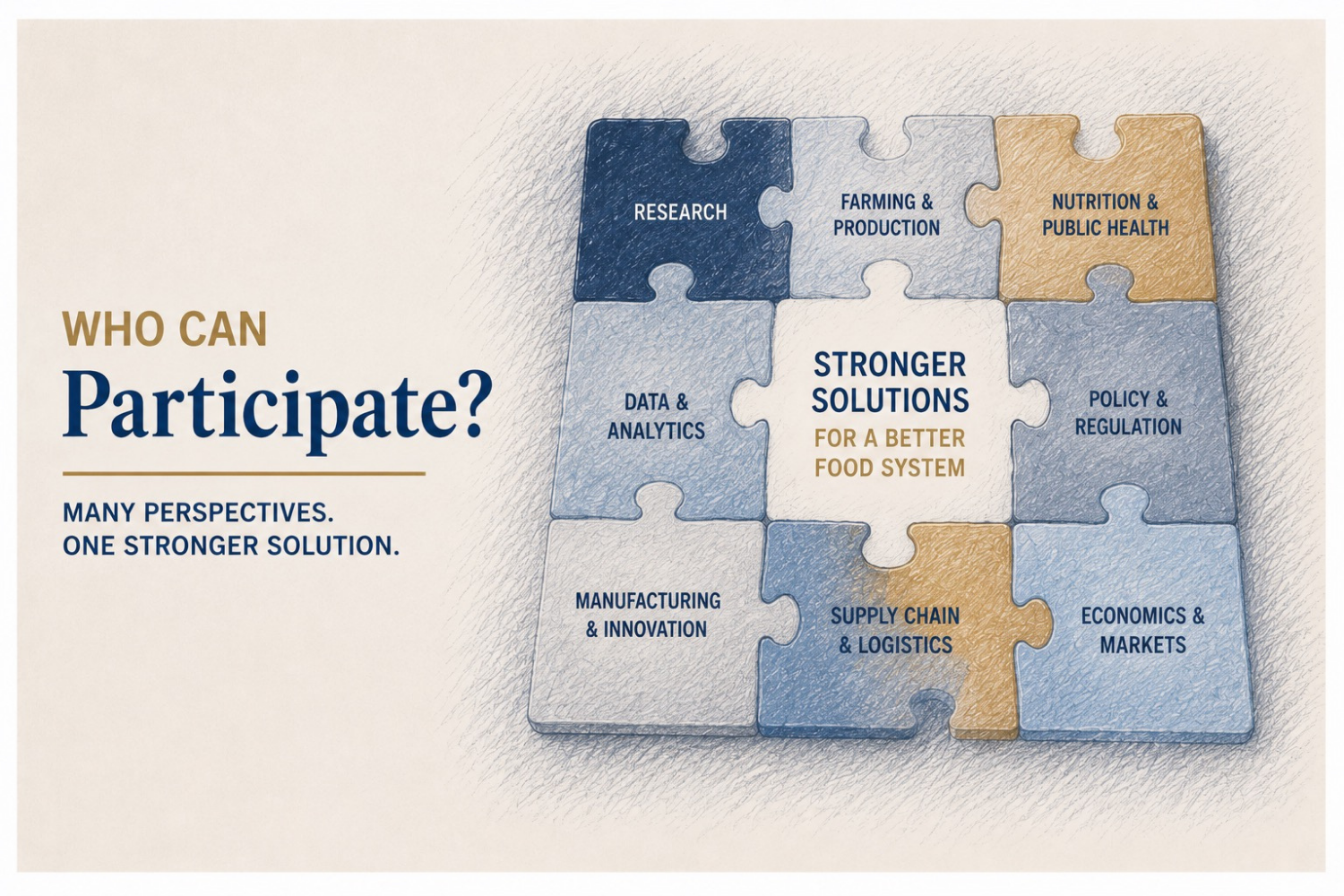
Who Gets to Participate?
Who gets to participate in food and nutrition policy debates? Practical experience and professional affiliations should not overshadow the evidence itself. Serious policy debates require scrutiny, context, and real-world understanding.
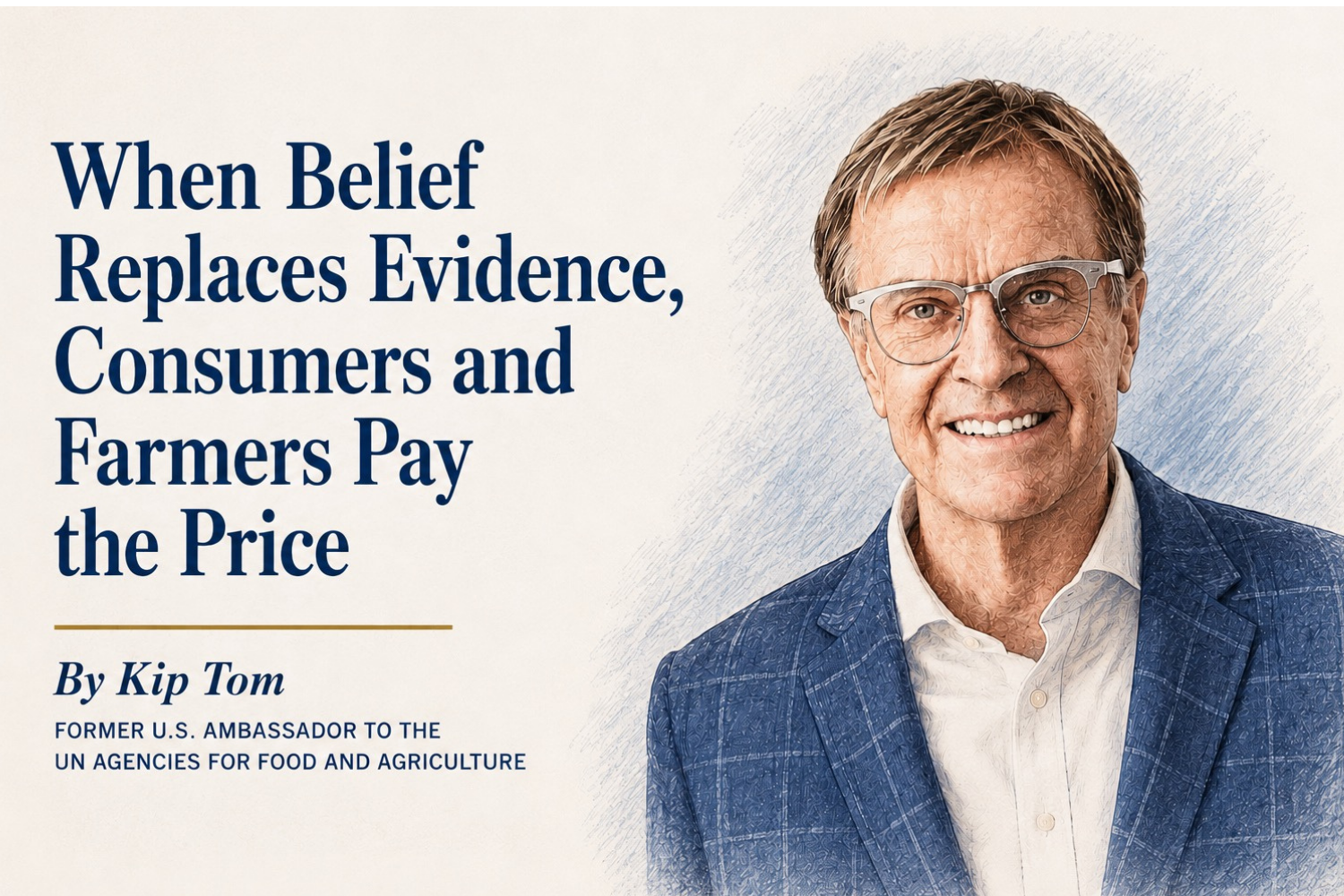
When Belief Replaces Evidence, Consumers and Farmers Pay the Price
When belief replaces evidence in agricultural policy, the consequences can be catastrophic — as Sri Lanka demonstrated when an overnight ban on fertilizers and pesticides collapsed rice yields by more than 30 percent and toppled a government. American farmers deserve a Farm Bill grounded in science and sound economics.
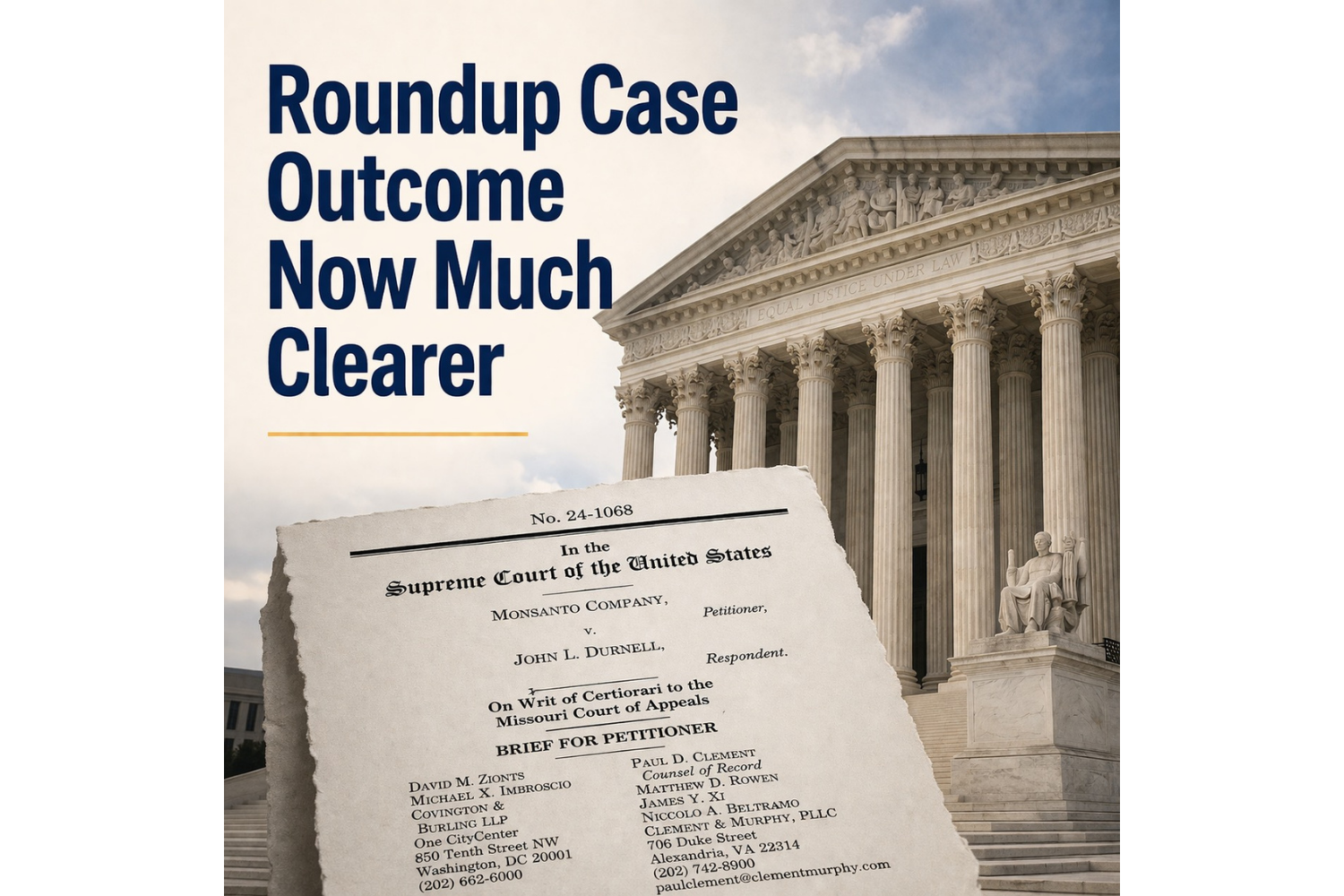
The Roundup Case Turns on One Question – and the Outcome is Now Much Clearer
The U.S. Supreme Court’s review of Monsanto v. Durnell is not about re-litigating the science of glyphosate. It is about who decides what appears on a federally regulated product label. Our latest analysis examines the oral argument, the legal path before the Court, and why the case could have implications far beyond one herbicide.

Statement on Oral Argument, Monsanto v. Durnell, April 27, 2026
“The Court is not being asked to decide whether glyphosate causes cancer. It is being asked who has authority to decide what goes on a federally regulated label.”
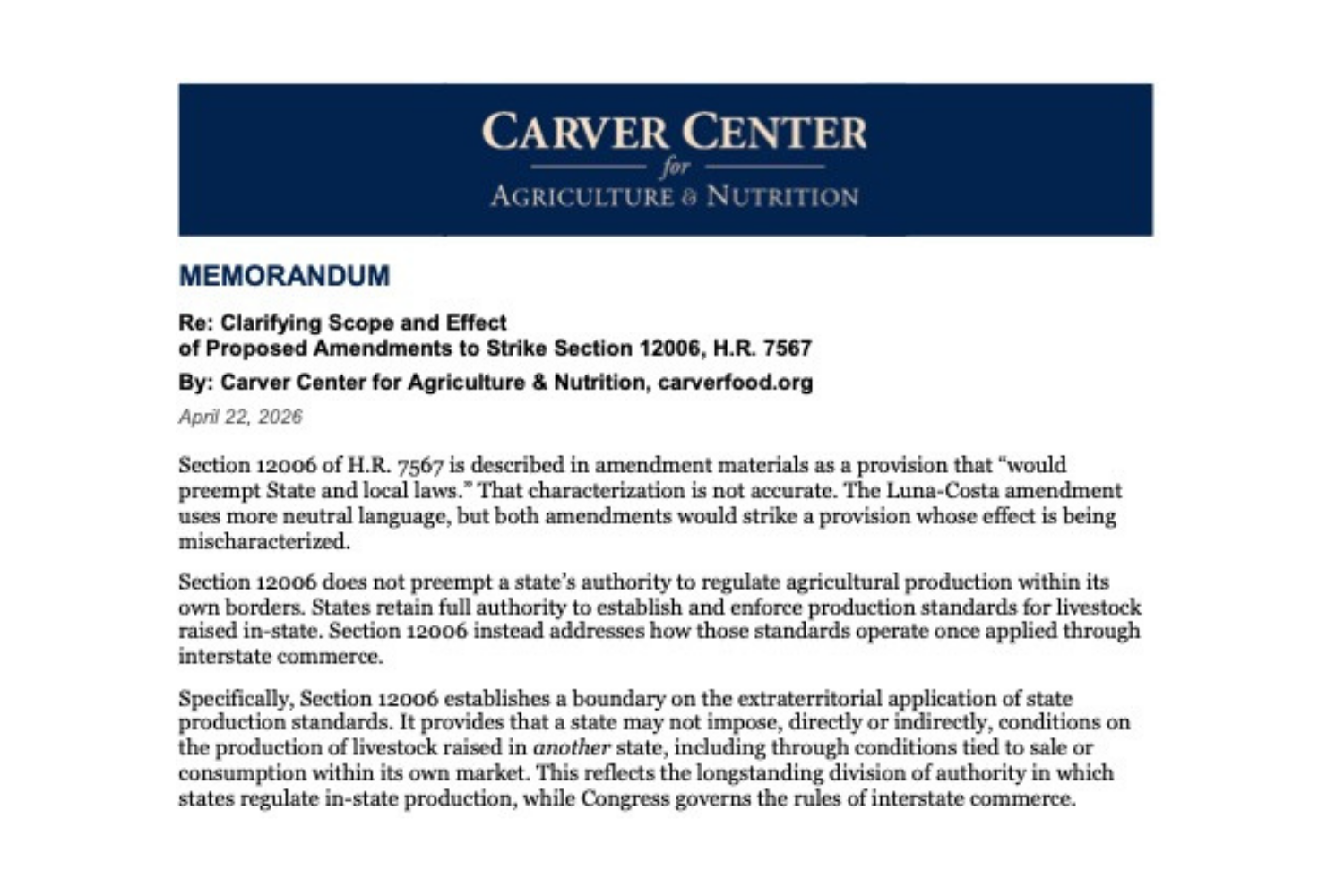
Clarifying Scope and Effect of Proposed Amendments to Strike Section 12006, H.R. 7567
Inside the Farm Bill, Section 12006 addresses when state agricultural standards can extend beyond state borders through interstate commerce. The provision does not limit in-state regulation. It clarifies how Congress may protect national food markets from conflicting state-by-state production mandates.
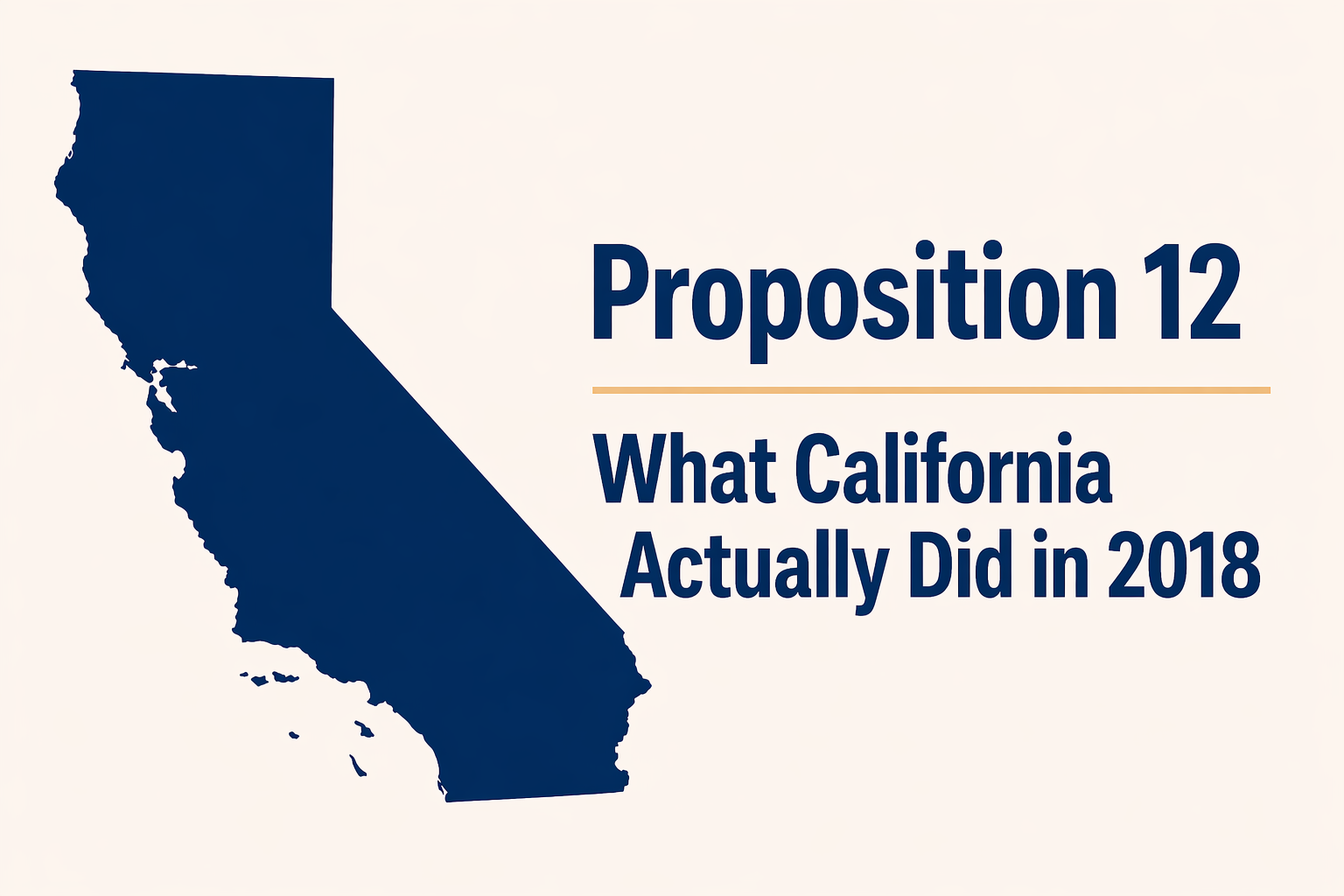
Proposition 12: What California Actually Did in 2018
California’s Proposition 12 was presented to voters as an animal confinement measure, but its broader impact has played out through interstate commerce and national food markets. Congress is now debating where state authority ends and national markets begin.

Boston Herald Letter to the Editor: When State Laws Cross State Lines
The issue before Congress is straightforward. With laws like Massachusetts Question 3, should one state be able to use its market to control how farmers in other states raise animals?

In a World of 51-49, One Sector Isn’t Close
In Pork Business, Andy Curliss examines why farming and agriculture remain among the most trusted sectors in America and what that trust reveals about the growing disconnect between everyday Americans and many of the institutions shaping public opinion.
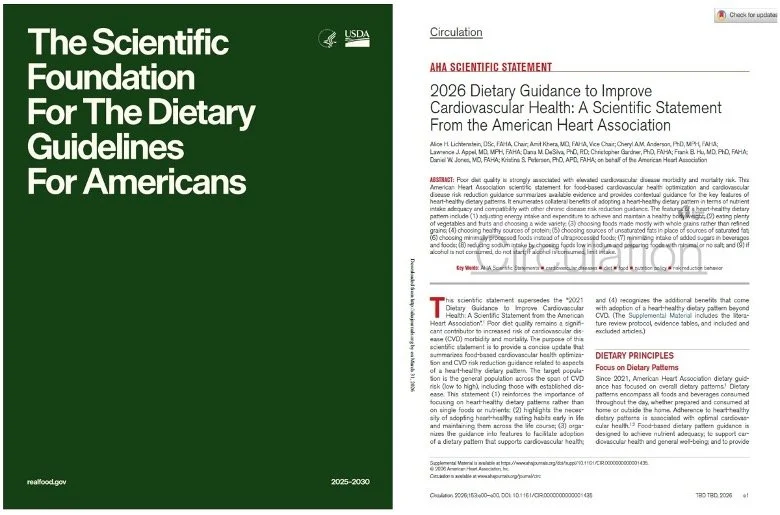
AHA Issues 2026 Dietary ‘Guidance’: What It Says, What It Doesn’t, and What It Means
The American Heart Association's 2026 dietary statement arrives alongside newly updated federal Dietary Guidelines, and the two don't fully agree. What's behind the divergence, and what it means for nutrition policy.
Agri-Pulse Opinion: The farm bill should follow the data on children’s health
Many policymakers now believe America's children are facing a widespread, systemic health crisis. That belief appears in federal commission reports, congressional testimony and media coverage. Taken at face value, and without context, it has begun driving debate over the farm bill and broader agricultural policy on the conviction that the food system is failing children's health.
The data tell a more complicated story.