
When Policy Turns Food Markets Into Islands
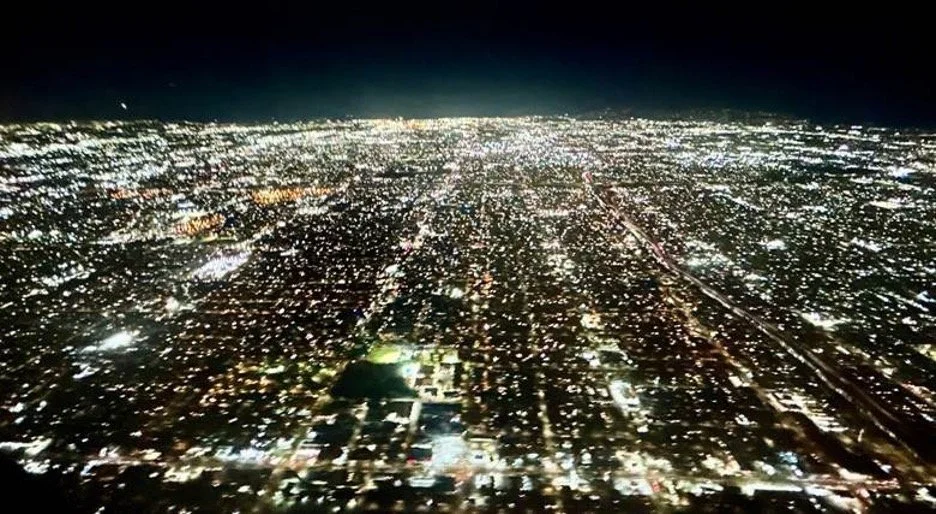
America, at scale. Los Angeles County, home to 10 million people and fewer than 800 farms.
How pork prices in Hawaii, California, and Utah show what happens when regulation adds distance to the grocery aisle.
By Andy Curliss
I was in a Safeway grocery store while in Honolulu, Hawaii, this month on a business trip when the prices stopped me.
A 12-ounce package of a national brand of bacon, with no special claims, was priced at $14.49. The fresh meat case was small, narrow. The frozen section was larger, filled with bulk packages. Longer shelf life. Lower risk.
I asked a clerk stocking shelves nearby how people in Hawaii afford the food at those prices.
“Quite a bit of it gets stolen,” he said, then went back to his boxes.
It didn’t sound like commentary. It sounded like store math.
On the same trip, I looked at the same product in three places.
In Los Angeles, that 12-ounce package of national brand bacon was priced at $9.39.
In Salt Lake City, it was on sale for $6.99.
Nothing about the bacon changed. Only the market did.
Hawaii is not hard to understand. There is a long stretch of ocean between the islands and the mainland. Food travels farther, costs more to move, and spoils faster. So fresh offerings shrink. Frozen offerings expand. Prices rise, and behavior adjusts. Stores plan for loss. Shoppers substitute.
This is not how food markets are supposed to work. It is how geography works.
Utah looked different. Ordinary. Fresh cuts dominated. Frozen options were there, but secondary. Prices were unremarkable enough not to linger over. It’s what an integrated food market looks like when distance and special barriers are not in the way.
In California, I stopped in Lynwood, known for its vibrant Latino culture, at a Food 4 Less grocery, and talked with shoppers and employees.
The meat counter is different than it used to be. More pork was being cut in-house instead of arriving pre-packaged from major processors.
I asked the meat specialist why.
After California’s Proposition 12 rule took effect, he said, a lot of pork became harder to source. Prices went up by a dollar or two per pound, sometimes even more.
“That’s hard to serve,” he said.
Again, no politics. Just arithmetic.
California is not an island. But parts of its food system are starting to behave like one.
California’s Proposition 12 does not ban pork. It changes the conditions under which fresh pork can be sold into the state. Production systems must meet specific requirements. Supply chains must be segregated. Compliance must be documented and defended. Legal and logistical risk rises. Flexibility falls.
Some producers adapt. Others exit. Supply tightens.
Retailers respond the same way they do in genuinely isolated markets. They rely more on frozen products. They cut more meat in-house. They simplify offerings. They pass along what they cannot absorb. In price-sensitive neighborhoods, even modest increases matter. A dollar per pound changes carts quickly.
This is often framed as a market choice. California sets standards. Farmers decide whether to participate.
That description can make sense for certain niche, boutique goods. It does not work for staple foods, the foods that keep most families fed within tight household budgets.
In food, that framing mistakes infrastructure for preference.
Food markets are built on national scale to serve Americans how they actually live. The population of Los Angeles County is about 10 million people, its vastness made clear by an endless sea of sparkling lights as we landed and departed LAX. There are fewer than 800 farms in LA County, most of them small-scale.
Processing plants, distribution networks, pricing, and inventory systems are designed to move the same product across state lines efficiently. When a large state imposes unique conditions, participation is no longer a simple opt-in. The cost of complying, or of segregating supply, is borne across the system.
That is why prices move even where producers do not “choose” the market. It is why retailers cut back on fresh offerings, lean harder on frozen product, and simplify shelves. The effects do not stop with the farms that comply or the farms that exit.
They spread to stores and families that never had a vote.
Hawaii shows what true isolation looks like. Fresh food becomes expensive. Frozen food increases. Loss becomes accepted as routine. Household budgets feel all that.
California is now imposing a different kind of distance. Not water, but regulation. The mechanism is different. The market response is the same.
That is not how competitive food markets work. It is how fragmented ones do.
Oceans raise food prices because they exist. Policy does that, too, when it fragments markets.
Curliss is Chairman at the Carver Center for Agriculture & Nutrition.