
Statement on Oral Argument, Monsanto v. Durnell, April 27, 2026
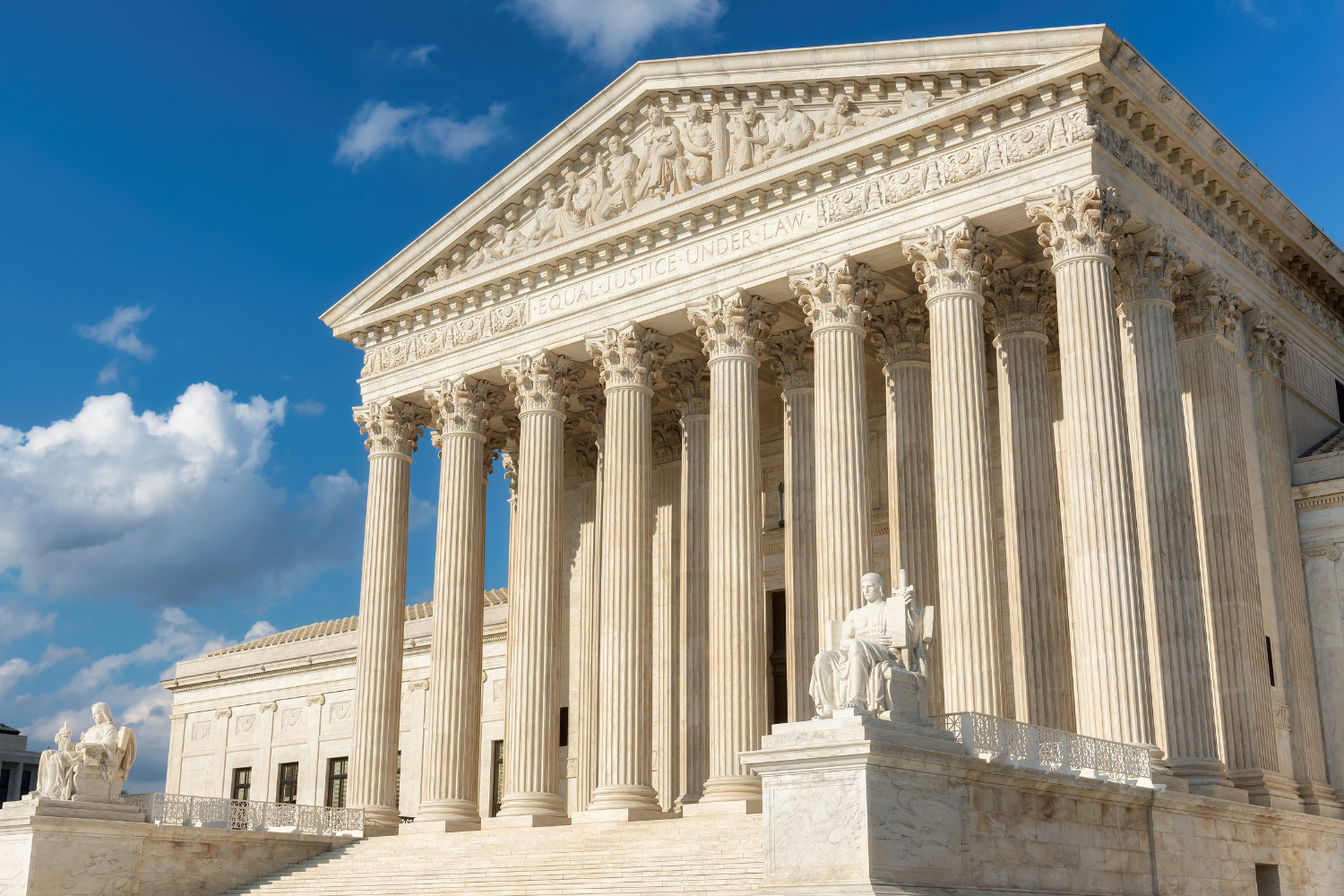
Statement on Oral Argument, Monsanto v. Durnell, April 27, 2026
Statement by Andy Curliss, chairman at the Carver Center for Agriculture & Nutrition, a nonprofit research organization (carverfood.org):
“The Court is not being asked to decide whether glyphosate causes cancer. It is being asked who has authority to decide what goes on a federally regulated label. Today’s argument focused on whether that decision operates through a single national regulatory process, or whether state-law claims can play a role when new information emerges before regulators act. The Court is working through how those systems fit together — not re-evaluating the underlying science.
“The implications are extensive, including for U.S. agriculture production, supply chains, and how federal and state authority interact. The outcome will shape whether labeling decisions function as a uniform national standard or are revisited through litigation over time. That question reaches beyond this case to how scientific findings become enforceable rules across a national market.
“The oral argument today makes clear this case is about who decides what goes on a federally regulated label — and whether that decision is fixed at the federal level or can be revisited in state courts as new information develops.”
Background for Coverage
The legal question before the Court is narrow, according to the briefs and the oral arguments in the Court today. That question asks whether federal pesticide law preempts a state-law, label-based failure-to-warn claim when the Environmental Protection Agency has not required the warning at issue.
The case does not require the Court to resolve competing scientific claims about glyphosate. It concerns how those claims are translated into law — through a federal regulatory process, through state tort liability, or through some combination of both.
The oral argument today consistently returned to four issues.
First, whether the statute operates as a general regulatory framework that permits parallel state-law duties, or as a product-specific approval system that fixes the contents of a label unless the agency changes it.
Second, how to interpret the provision stating that registration “shall not be construed as a defense,” and whether that language preserves room for liability despite federal approval.
Third, whether manufacturers can independently add warnings under federal law, or must obtain prior agency approval for safety-related label changes.
Fourth, the role of courts in defining “misbranding” (the statutory standard for an inadequate or false label), and how much weight to give to agency determinations when assessing preemption.
A central line of questioning focused on what happens after a product has been registered. Several Justices explored whether a product that complies with an EPA-approved label can later be treated as misbranded based on evolving information, and whether state-law claims may proceed during the period before the EPA revisits its regulatory conclusions.
The Court also examined whether the statute provides adequate mechanisms — including agency petitions and cancellation proceedings — for addressing new information outside of state litigation.
That issue reflects a deeper structural question: whether the statute creates a closed federal system or a layered one in which federal regulation and state law operate at different stages.
The Court also examined the practical consequences of each approach. Questions addressed whether manufacturers could change labels on their own, whether the only alternative would be to stop selling a product, and whether state-law liability would introduce variation in labeling standards across jurisdictions.
Related discussion considered whether applying state-law duties after federal approval would impose liability based on standards that did not exist at the time a product was marketed. The argument also touched on the role of courts in independently interpreting statutory terms following recent shifts in administrative law doctrine.
The implications extend beyond pesticide regulation. At issue is how authority is allocated among federal agencies, courts, and juries in areas where scientific evidence evolves over time. The Court’s decision will determine whether federal labeling decisions function as a stable national standard, or whether those decisions can be revisited through litigation while the regulatory process continues.
While the oral argument focused on a defined set of legal questions, the broader amicus record reflects a wider range of arguments about how those systems should operate in practice.