
The Roundup Case Turns on One Question – and the Outcome is Now Much Clearer
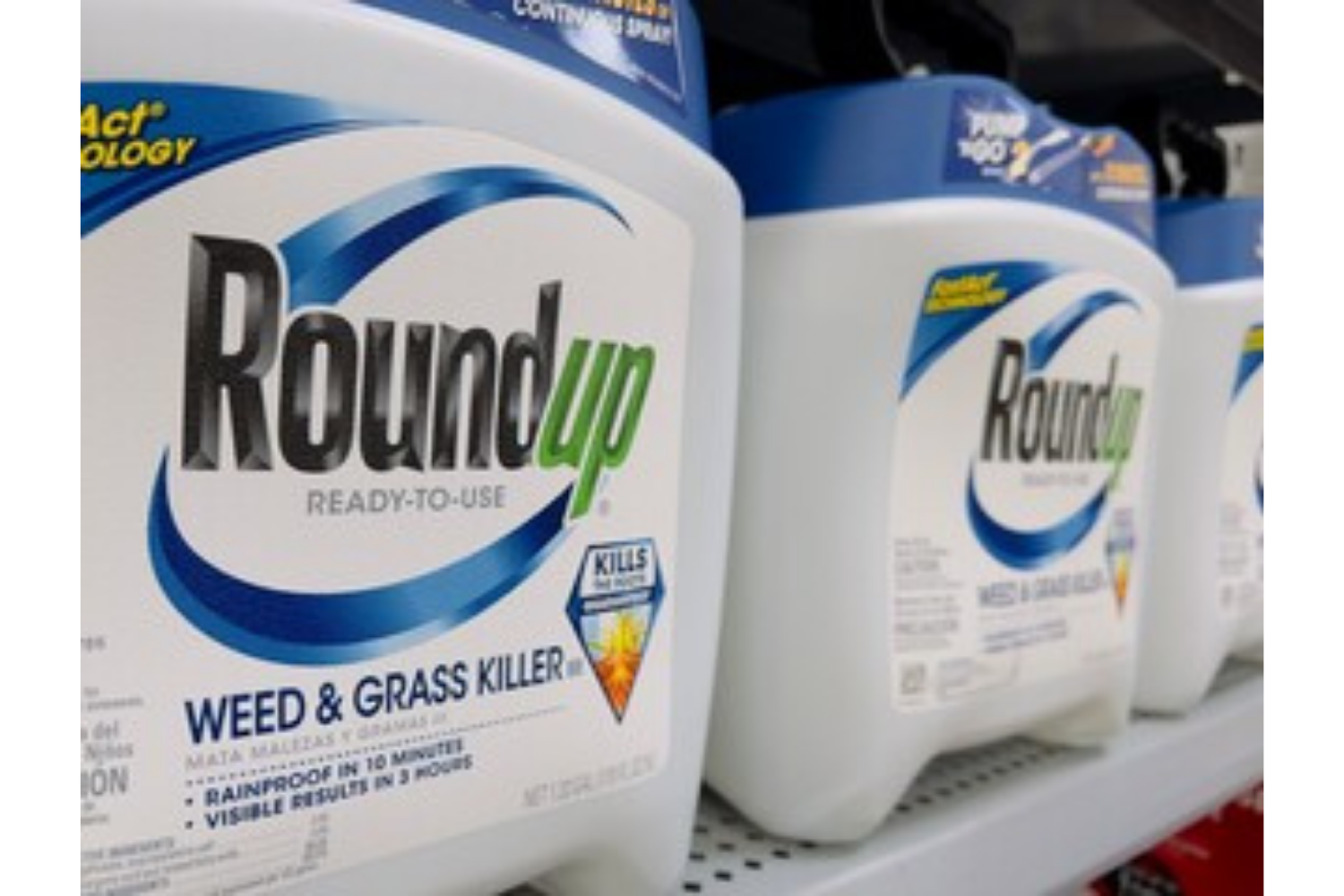
The Roundup Case Turns on One Question – and the Outcome is Now Much Clearer
By the Carver Center for Agriculture & Nutrition
On Monday morning, in a packed courtroom, the U.S. Supreme Court spent more than an hour on a case that has already produced thousands of lawsuits, billions in settlements, and years of argument about glyphosate and cancer.
Many of the media headlines that followed were familiar. A divided Court. Tough questions for both sides. An outcome that could go either way.
But assessing the oral argument, and the filed briefs, provides more clarity that points in one direction: the Court is more likely than not to rule for Monsanto on narrow grounds that do not require resolving every contested question in the case.
Here is why. The case turns on a single, practical question.
Could Monsanto have legally added the safety warning to its herbicide Roundup that a Missouri jury said it should have?
If the answer is no, the path to decision is straightforward.
And the answer on Monday was – no.
The conflict
A herbicide cannot be sold in the United States unless the EPA approves its label. That label includes the product’s safety warnings. It is a legal requirement, not a suggestion.
Once that label is approved, a company cannot change those warnings in a way that affects safety without going back to the agency. A label that includes a false or misleading warning is itself unlawful.
The EPA approved Roundup’s label without a cancer warning. It has repeated that conclusion across decades and administrations. It has also said that adding such a warning would be misleading under federal law. Every major regulatory body, including in Canada, Australia, Japan, New Zealand, the European Union, and South Korea, has reached the same conclusion independently.
A Missouri jury required that warning and imposed liability for not including it.
What was Monsanto supposed to do?
Add a warning the federal government said would violate the law, or follow the approved label and face liability later.
There is no third option.
One important distinction. Much of the public debate turns on a 2015 IARC classification placing glyphosate in its “probably carcinogenic” category. IARC classifies hazards – that is, whether a substance can cause cancer under any conditions. The EPA assesses risk – determining whether a substance is likely to cause harm at real-world exposure levels.
Those are different questions. IARC’s Group 2A category also includes night-shift work, very hot beverages, and working as a hairdresser. The Court was not asked to resolve the science. It was asked who has authority to translate it into labeling rules.
How to read the argument
The Justices ask two kinds of questions.
Some test the edges of a theory — what happens in harder cases, where a ruling needs to stop. These often sound skeptical of the side being pressed. They are not votes against that side.
Others supply a rule for deciding the case.
Coverage across the Wall Street Journal, the New York Times, Politico, and others emphasized a divided Court and skeptical questions for both sides. That describes how the argument sounded. It does not explain how the case gets decided.
The testing questions
Chief Justice Roberts asked whether states would be completely powerless if new information emerged before the EPA acted. He pressed, got an answer pointing to cancellation petitions and agency suspension powers, and did not press further. We viewed that as the chief justice identifying where a ruling needs to draw a line, not signaling dissent.
Justice Gorsuch asked why states can ban a product outright but cannot impose tort liability, which is a lesser step. He got no clean answer from either side. He pressed both sides on different points and his questions did not resolve in either direction. He is an uncertain vote.
Justice Sotomayor pressed whether existing procedures allowed the company to add a warning without prior approval, pointing to a prior instance where a different Bayer product added a cancer-related warning through a notification process. The government called it an error and said the regulations are unambiguous. She pressed both points and received no answers that resolved either.
Constructing the alternative
Justice Jackson built the most complete alternative argument from the bench – and in doing so, laid out what a dissenting opinion likely looks like.
Her position: a product can be registered and later become inadequate as science evolves. Registration and misbranding are independent obligations under the statute. State tort law can enforce the misbranding standard during the gap before the EPA updates its conclusions about a registered product in light of information. She cited Bates v. Dow Agrosciences, where the Court described tort suits as “a catalyst” for updating labels.
She argued directly against what appears to be a majority’s central framing: that imposing liability for following an approved label is retroactive punishment. Her answer is that the misbranding obligation is ongoing by design – it does not freeze at the moment of registration.
This is a full dissent framework. And it is what Kavanaugh explored the most.
The questions to decide the case
Justice Kavanaugh returned to the same point three times across two separate exchanges. If the federal government tells a company what must be on its label and the company follows those instructions, can a jury impose liability under a different standard applied after the fact? He called that “penalizing you retroactively” for doing what you were told. Monsanto’s lawyer called the retroactivity framing a “helpful” way to view it. Kavanaugh also pressed Durnell’s lawyer on whether changing the EPA-approved label would violate federal law – and when the lawyer said no, followed up: “Was the Solicitor General wrong about that?” Kavanaugh was constructing an argument, not probing for one.
Justice Barrett focused on how to resolve the case without unsettling the broader system. She established that design defect claims survive – only label-based failure-to-warn claims are at issue. She then addressed what lawyers call the “impossibility” argument: the idea that if a company cannot comply with both federal and state law at the same time, federal law wins. Her observation was that in this case, impossibility and federal preemption point to the same place. The reason Monsanto cannot add the warning is that the EPA-approved label is binding. Her questions were about scope, not whether preemption applies.
Justice Kagan pressed Durnell’s lawyer until that side’s theory narrowed. She noted that federal law’s preemption provision is literally labeled “uniformity” and asked what uniformity means if juries reach different results case by case. Kagan’s questions pressed the other direction – the federal statute delegates substantial authority to the EPA, so how is Durnell’s theory consistent with that? This produced the argument’s key concession: even Durnell’s own lawyer acknowledged that some EPA actions create binding labeling requirements, while arguing that registration alone does not. Kagan’s questions press whether that distinction holds.
Justice Alito asked directly whether Loper Bright said anything about preemption. The answer was no. He asked whether limiting Loper Bright to separation-of-powers cases would be irrational. Durnell’s lawyer conceded the Court could draw that line. That concession ended the exchange. The Loper Bright argument did not survive the argument intact.
Justice Thomas asked where the legal obligation originates – the statute, the regulation, or the specific label. His questions were clarifying, without adversarial engagement in either direction.
What the alignment shows
Roberts, Gorsuch, and Jackson each pressed Monsanto’s side – but on different questions. Roberts was testing scope. Gorsuch was probing consistency. Jackson was building the dissent. Those are not three votes against Monsanto. They are three justices doing three different things.
Kavanaugh, Barrett, and Alito focused on the same problem from different angles. A company followed a federally approved label. The warning the jury required was not permitted under that system. They were not testing that argument. They were building it. That is a majority path.
The Court can decide the case by answering one question: Could Monsanto add the warning on its own? The government’s answer – supported by regulatory text the government’s lawyer described as “absolutely unambiguous” – is no.
Safety-related label changes require prior EPA approval. The EPA had already said a cancer warning would be false and misleading. Missouri’s tort duty requires something federal law does not allow.
The alternative asks the Court to let juries revise labels between federal reviews. The statute provides less support for that step.
What happens next
We avoid speculation and prediction. Based on the record, through briefs and argument, the most likely outcome is a ruling in favor of Monsanto. Expect 6-3, or 5-1-3 if Gorsuch writes separately. Roberts appeared likely to aim to keep the ruling narrow. The question of what happens when new information has emerged and the EPA has not yet acted will be reserved for another case. Gorsuch may note the ban-versus-liability tension in a concurrence.
Jackson is likely to lead the dissent, joined by Kagan and Sotomayor, arguing that registration and misbranding are independent obligations and that state law enforces the misbranding standard during the gap between federal reviews.
But again, no one outside the Court knows what the Court will decide, nor who and how they will decide it. We offer this summary as a touchpoint drawn from the documents and argument, and we welcome disagreement or alternative viewpoints.
We do know the opinion will not decide whether glyphosate causes cancer.
It will answer a narrower question. Can a company be held liable for failing to add a warning that federal law did not permit it to add?
That is the case the Court heard.