Insight: Brazil’s NOVA Is Not the Answer for American Food Policy
Insight: Brazil’s NOVA Is Not the Answer for American Food Policy
By the Carver Center for Agriculture & Nutrition
In recent years, a food classification system called NOVA, developed in Brazil in 2009, has gained traction in academic literature – and, increasingly, policy debates in the United States.
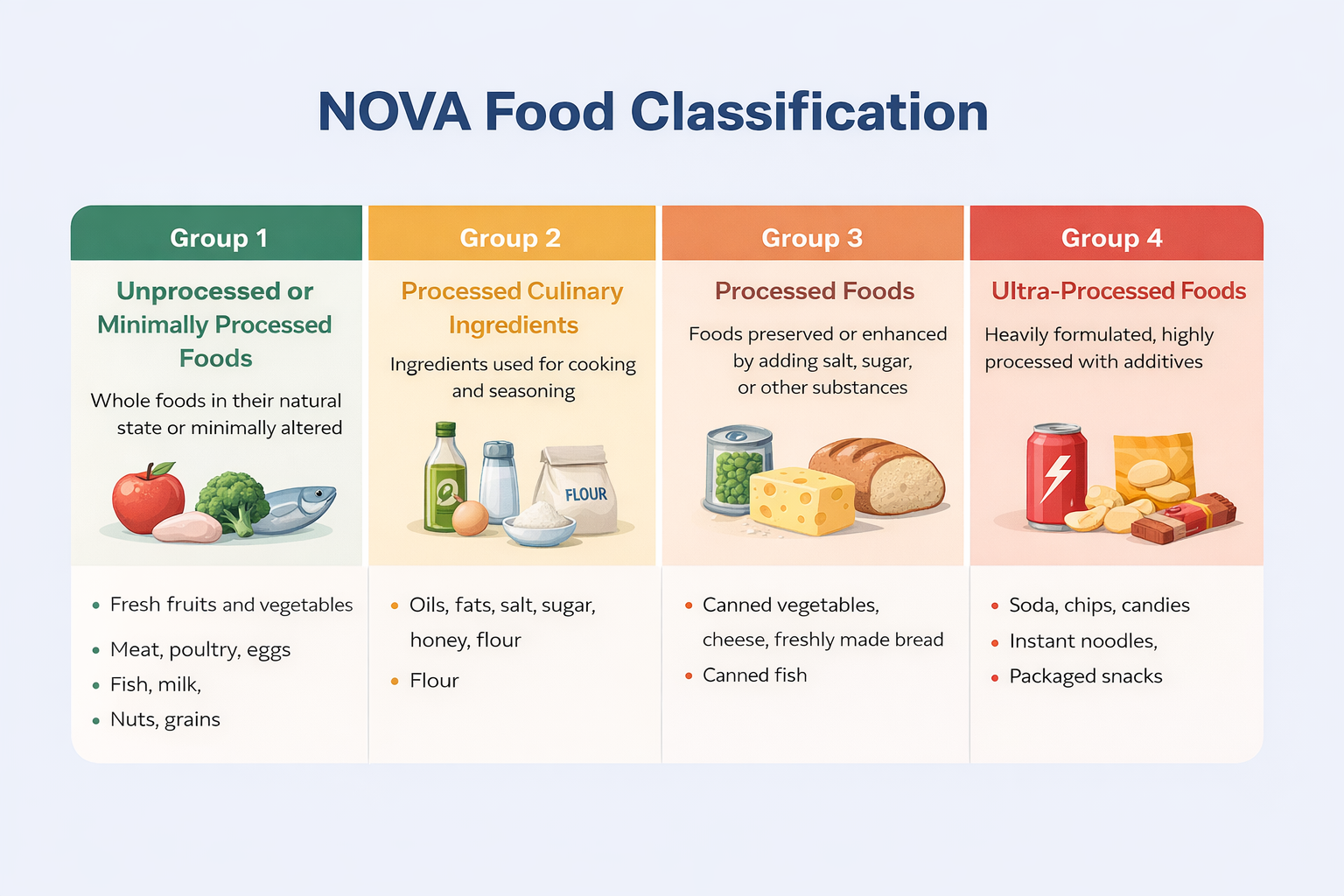
NOVA sorts foods into four categories based largely on the degree and type of processing, labeling its fourth group as "ultra-processed." It is often presented as a ready-made solution for nutrition policy, labeling, and procurement.
It is not.
NOVA was developed for a very different context, and its structure makes it poorly suited for American food policy. Importing it wholesale would not clarify dietary guidance. It would create confusion, instability, and unintended consequences, particularly for affordability and access to nutrient-dense foods.
The first problem is over-breadth. NOVA sweeps together foods with radically different nutritional value. Under its framework, yogurt, whole-grain breads, canned fish, and protein-rich staples can be grouped alongside soda, candy, and packaged snack cakes. That may make sense as a theoretical critique of industrial food systems, but it does not align with how Americans eat, shop, or meet nutritional needs. It also conflicts with the Dietary Guidelines for Americans, which emphasize nutrient density, variety, and practical eating patterns.
The second problem is that NOVA focuses on process rather than performance. It says little about whether a food delivers protein, vitamins, minerals, or satiety per calorie, or whether it supports healthy eating patterns in the real world. A classification system that ignores how food actually performs in the human diet is a weak foundation for policy.
Third, NOVA is unstable. Its definition of “ultra-processed” has shifted repeatedly over time and is applied inconsistently across studies and countries. That instability may be tolerable in academic debate. It is not acceptable for regulatory frameworks that would influence labeling rules, procurement standards, and federal nutrition programs affecting millions of families.
Finally, NOVA treats long-standing and culturally familiar preservation methods arbitrarily. Fermenting, curing, smoking, and canning have been part of human diets for centuries. Under NOVA, foods produced using these methods can be penalized simply because safe additives or modern packaging are present, producing outcomes that defy common sense and erode public trust.
For U.S. policy, there is a better path.
Rather than classifying foods by process alone, food policy should evaluate foods by performance: how they contribute to health, satiety, affordability, and real dietary needs. A performance-based framework recognizes that not all calories are equal, that protein quality matters, that affordability determines access, and that cultural fit shapes whether guidance is adopted or ignored.
In comments recently submitted to the Food and Drug Administration, the Carver Center for Agriculture & Nutrition outlined such a framework, built around six evidence-based dimensions: protein quality and quantity, nutrient density, satiety, validated health benefits, affordability, and cultural fit. This approach aligns with federal dietary guidance, protects access to nutrient-dense staples, and creates incentives for improvement rather than blunt stigmatization.
America’s nutrition policy should be developed by and for Americans. That means grounding definitions in science, stability, and real-world outcomes, not importing a classification system designed for a different country and a different set of assumptions.
The stakes are high. Definitions adopted today will shape research priorities, labeling regimes, procurement rules, and nutrition programs for years to come. Getting them wrong risks higher costs, reduced choice, and greater confusion, without delivering better health.